
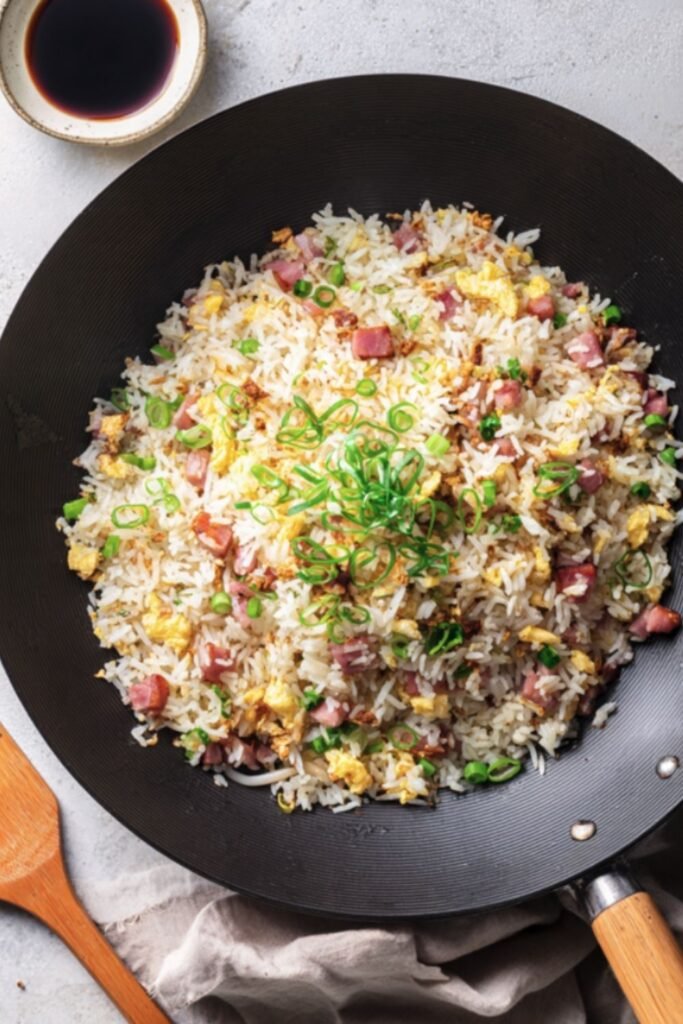
You’ve probably noticed that fried rice from your favorite takeout spot tastes way better than anything you’ve attempted at home, right. Well, I’m about to change that for you. The secret isn’t some fancy technique or hard-to-find ingredients—it’s actually simpler than you’d think. But there’s one critical step that most home cooks miss, and it’s the reason your rice turns mushy instead of gloriously crispy.
Why You’ll Love this fried rice
What’s not to love about a dish that comes together in under twenty minutes and tastes like you’ve been cooking all day? I’m genuinely fascinated by how fried rice transforms simple leftovers into something restaurant-quality.
The beauty lies in its flexibility—I can swap proteins based on what’s hanging around my kitchen. Those crispy edges from the rice hitting the hot pan, the way eggs bind everything together, the umami punch from soy sauce.
It’s efficient, customizable, and honestly, pretty forgiving. Even when I experiment with random vegetables, it somehow works. That’s the magic I keep coming back for.
Also read: Creamy Classic Egg Salad Recipe for Picnics
What Ingredients are in fried rice?
Creating this savory classic fried rice requires a carefully balanced mix of proteins, vegetables, and aromatics that work together to deliver authentic flavor and texture. The ingredient list is straightforward and forgiving, making it accessible for cooks of all skill levels.
Each component plays a specific role in building the dish’s characteristic taste and mouthfeel, from the structural foundation of cooked rice to the rich additions that elevate it from simple to spectacular.
Ingredients:
- 3 cups cooked rice
- 3 slices bacon
- 3 eggs, slightly beaten
- 1 1/4 cups meat, finely diced
- 2 green onions, finely chopped
- 1/2 lb fresh bean sprouts
- 6 mushrooms, sliced
- Salt
- 1 dash black pepper
- 2 tablespoons soy sauce
When preparing your ingredients, it is crucial that the rice should be already cooked and ideally cooled—day-old rice works best as it has less moisture and won’t become mushy during frying.
The meat can be customized according to your preferences or what you have available, whether that’s pork, chicken, ham, beef, or shrimp.
All vegetables should be prepped and measured before you begin cooking, as the actual cooking process moves quickly. Having everything ready guarantees smooth execution and allows you to focus on achieving those desirable crispy edges and perfectly cooked textures.
How to Make this fried rice
- Begin by cooking 3 slices of bacon in a large skillet or wok over medium heat until it is lightly browned but not crunchy, then set it aside to cool. Once cooled, chop the bacon into fine pieces and reserve.
- Add your 3 slightly beaten eggs directly to the bacon drippings still in the pan and scramble them thoroughly. Once cooked, remove the eggs and chop them very finely—this guarantees even distribution throughout the finished dish.
- The bacon fat creates a flavorful base that infuses the eggs with rich, savory notes essential to authentic fried rice.
- Add your 3 cups of cooked rice to the same skillet and fry for approximately 5 minutes while stirring constantly. This step is critical for breaking up any clumps and allowing the rice to absorb the bacon-infused flavors from the pan.
- After this initial frying period, add all remaining ingredients: the 1 1/4 cups finely diced meat, 2 finely chopped green onions, 1/2 lb fresh bean sprouts, 6 sliced mushrooms, the reserved chopped bacon, chopped eggs, salt, 1 dash of black pepper, and 2 tablespoons of soy sauce.
- Mix everything together thoroughly and continue cooking for 10 minutes longer, stirring occasionally to guarantee even heating and flavor distribution.
- Serve the fried rice piping hot, while it still retains its warmth and the vegetables maintain their slight crispness. The combination of tender rice, crispy edges, tender vegetables, and savory proteins creates a well-balanced dish that satisfies on multiple textural levels.
- Remember that you can customize the meat selection based on your preferences—pork, chicken, ham, beef, and shrimp are all excellent choices that will yield delicious results.
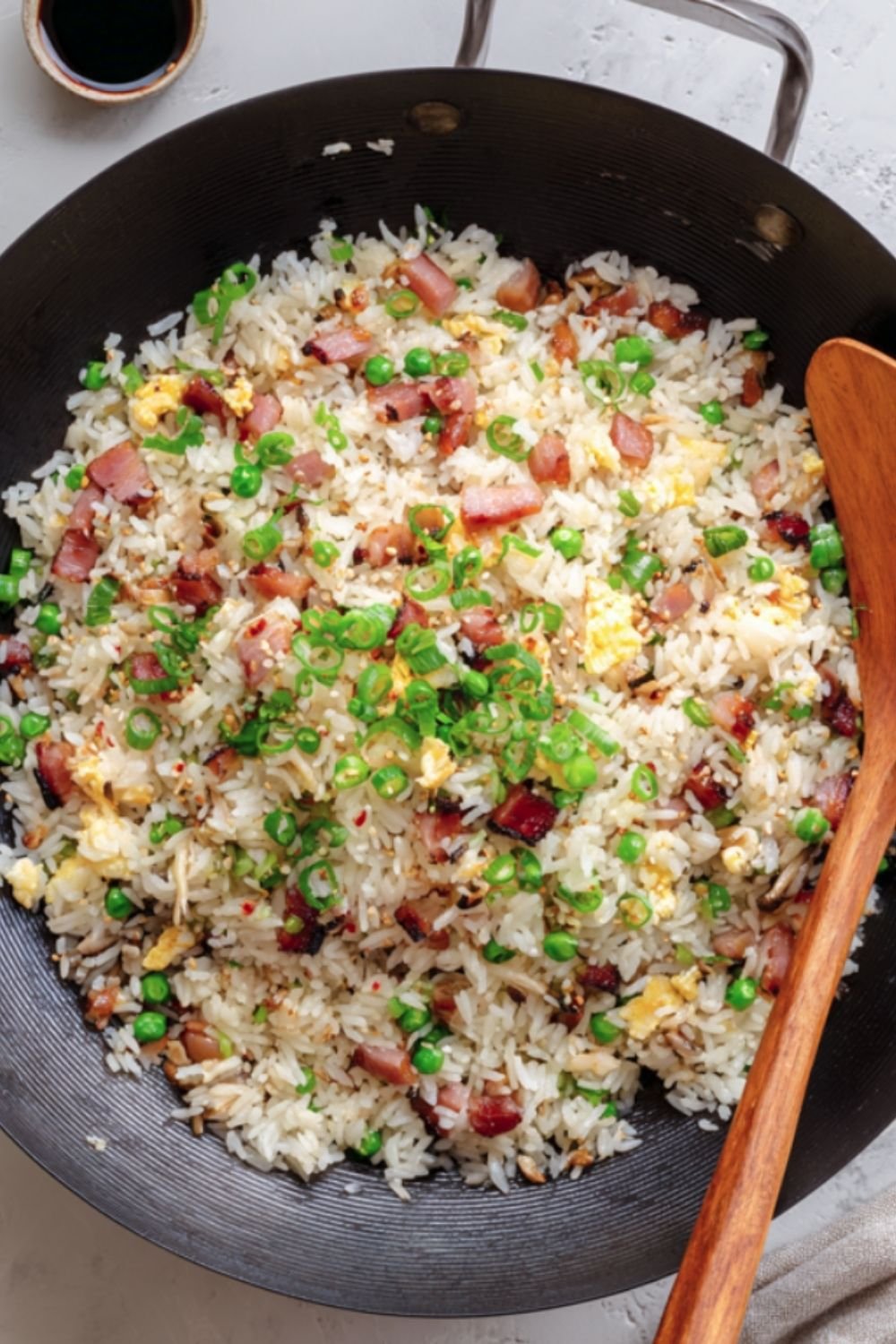
Fried Rice for Late Lunches and Clean Bowls
Ingredients
Method
- Begin by cooking 3 slices of bacon in a large skillet or wok over medium heat until it is lightly browned but not crunchy, then set it aside to cool. Once cooled, chop the bacon into fine pieces and reserve.
- Add your 3 slightly beaten eggs directly to the bacon drippings still in the pan and scramble them thoroughly. Once cooked, remove the eggs and chop them very finely—this guarantees even distribution throughout the finished dish.
- The bacon fat creates a flavorful base that infuses the eggs with rich, savory notes essential to authentic fried rice.
- Add your 3 cups of cooked rice to the same skillet and fry for approximately 5 minutes while stirring constantly. This step is critical for breaking up any clumps and allowing the rice to absorb the bacon-infused flavors from the pan.
- After this initial frying period, add all remaining ingredients: the 1 1/4 cups finely diced meat, 2 finely chopped green onions, 1/2 lb fresh bean sprouts, 6 sliced mushrooms, the reserved chopped bacon, chopped eggs, salt, 1 dash of black pepper, and 2 tablespoons of soy sauce.
- Mix everything together thoroughly and continue cooking for 10 minutes longer, stirring occasionally to guarantee even heating and flavor distribution.
- Serve the fried rice piping hot, while it still retains its warmth and the vegetables maintain their slight crispness. The combination of tender rice, crispy edges, tender vegetables, and savory proteins creates a well-balanced dish that satisfies on multiple textural levels.
- Remember that you can customize the meat selection based on your preferences—pork, chicken, ham, beef, and shrimp are all excellent choices that will yield delicious results.
Notes
Fried Rice Substitutions and Variations
While the classic version I’ve just walked you through hits all the right notes, the beauty of fried rice lies in how forgiving it is when I want to shake things up. I could swap the bacon for crispy tofu, toss in cashews for crunch, or experiment with different vegetables like broccoli or carrots. Pineapple chunks? Sure, why not. I might substitute oyster sauce for soy sauce, add ginger for warmth, or throw in sesame oil for depth. The meat’s flexible too—leftover rotisserie chicken works great. I’d say don’t fear improvising; that’s where fried rice truly shines.fried rice Substitutions and Variations
While the classic version I’ve just walked you through hits all the right notes, the beauty of fried rice lies in how forgiving it is when I want to shake things up. I could swap the bacon for crispy tofu, toss in cashews for crunch, or experiment with different vegetables like broccoli or carrots.
Pineapple chunks? Sure, why not. I might substitute oyster sauce for soy sauce, add ginger for warmth, or throw in sesame oil for depth. The meat’s flexible too—leftover rotisserie chicken works great. I’d say don’t fear improvising; that’s where fried rice truly shines.
What to Serve with fried rice
Most home cooks don’t realize that fried rice doesn’t have to be a standalone dish—it’s actually the perfect sidekick to all sorts of proteins and appetizers. I’d pair it with grilled chicken, teriyaki salmon, or crispy spring rolls for a complete meal.
Want something lighter? Serve it alongside steamed dumplings or egg rolls. Don’t sleep on adding it to lettuce wraps either. The beauty here is that fried rice plays well with others, absorbing flavors without demanding attention. Think of it as your culinary Swiss Army knife—versatile, reliable, and ready to complement whatever else lands on the plate.
Final Thoughts
Making fried rice at home doesn’t have to feel intimidating, and honestly, that’s the whole point of this recipe. I love how adaptable it is, letting you toss in whatever protein or vegetables you’ve got hanging around your kitchen. You’re not locked into following rules here—that’s the beauty of it. Want to swap chicken for shrimp? Go for it. Prefer broccoli over mushrooms? Perfect. This dish teaches you confidence in the kitchen, showing that cooking doesn’t require fancy techniques or expensive ingredients. It’s straightforward, forgiving, and genuinely delicious.